CreditSync is MoboGage’s Established credit-operations capability for distributor and agent finance. It handles credit assignment, authorized limits, issuance, collections and overdue tracking, while authorized lenders keep their lending policies and decisions.
Distribution runs on working capital. When limits live in a spreadsheet and collections live in someone’s inbox, exposure is usually discovered at month-end. CreditSync puts distributor and agent credit operations in the same system as distribution, and leaves the regulated lending decision with the lender.
MoboGage lists CreditSync as Established under both retail (wallets and CreditSync) and banking (CreditSync operations). Company-reported heritage goes back to 2007 (IWT Group); MoboGage Private Limited was incorporated in February 2017 in Jaipur. Reach across 17 countries is company-reported business and project presence through partners; the only office is the Jaipur HQ.
Distributor and agent credit operations, defined
These are the daily controls around float funding: who can carry how much exposure, when value is issued against that limit, how repayments are recorded, and how overdue positions are aged and owned. The commercial problem is visibility and accountability. Whether a loan may be granted at all is a regulatory question for the authorized lender, and CreditSync is built around that split.
How a CreditSync limit check works
Each node in the hierarchy carries an authorized limit, the outstanding balance it owes, and any holds for transactions in flight. Available credit is the limit minus outstanding minus holds. When a distributor requests stock or float, the platform places a hold for the amount in the same database transaction that checks availability, so two requests arriving together can’t both pass against the same headroom. The hold turns into issued credit when the stock transfer commits, or is released if it fails.
Every limit assignment records who authorized it, the ceiling, effective dates and any product or channel restriction. Temporary raises carry an expiry date and need a second approver. A change is a dated, logged event; the old value stays visible in history.
Issuance, collections and overdue aging
Issuance posts value or float against the limit and is attributable to a node, a product context (airtime float versus catalogue float, for example) and a reference. Issuance that bypasses the limit check would recreate the spreadsheet problem, so the platform doesn’t allow it.
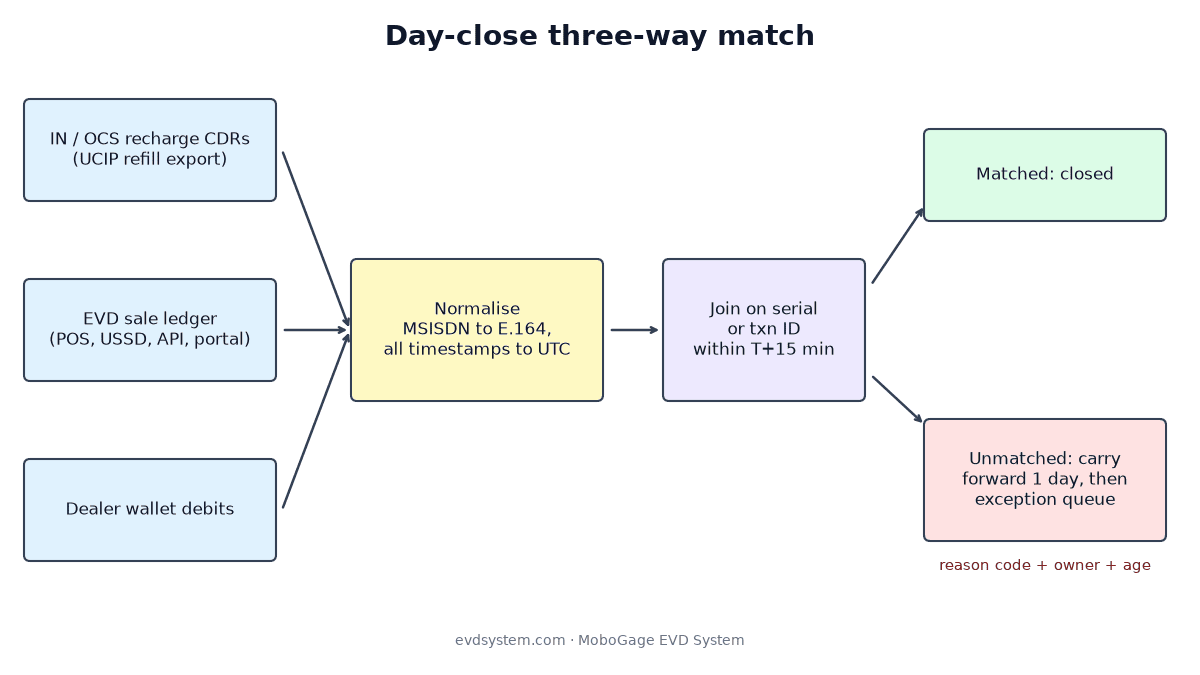
Repayments reduce exposure. Collections are easiest to match when each distributor pays into a reference the platform can recognise, such as a virtual account number or a wallet transfer with the distributor ID, so finance matches inflows automatically and only handles leftovers. The allocation order (fees first, then oldest principal, or another rule) is the lender’s policy, configured rather than coded. Partial payments and disputed amounts get their own states instead of a note in a comments field.
Overdue positions are aged by days past due into buckets the lender chooses; 1-30, 31-60, 61-90 and 90+ is a common convention. The platform tracks and flags. Escalation and recovery decisions belong to the authorized institution and its agents.
Who relies on it, and for what
The lender, bank or fintech keeps policy, underwriting and decision rights; the platform reflects the limits it authorizes and records issuance and collection events for portfolio monitoring. MoboGage supplies technology and integration, and regulated-service responsibilities stay with the client institution.
The distributor network owner sees hierarchy exposure (which nodes are near their limit, which are overdue, which collections cleared) in the same channel software used for electronic voucher management. Agents and retailers see their limit, balance and amount owed without phoning anyone, which means fewer failed sales caused by float running out unnoticed. Finance and channel operations get unique references and explicit states on issuance, repayment and aging, with owners on overdue queues and audit trails on corrections. Paired with reconciliation discipline, that shortens the month-end argument considerably.
Where CreditSync stops
The company profile is explicit that authorized lenders retain lending policies and decisions. CreditSync is not automated credit scoring, a bureau replacement or a substitute for a banking licence, collateral appraisal or credit-committee minutes. When it sits next to mobile money or merchant channels the same rule holds: technology connects the workflows, and regulated parties own regulated outcomes.
Proposed banking items such as a reconciliation exception hub or financial-crime evidence operations are separate roadmap topics, not Established CreditSync features, and are handled through discovery.
How it connects to EVD, the catalogue and wallets
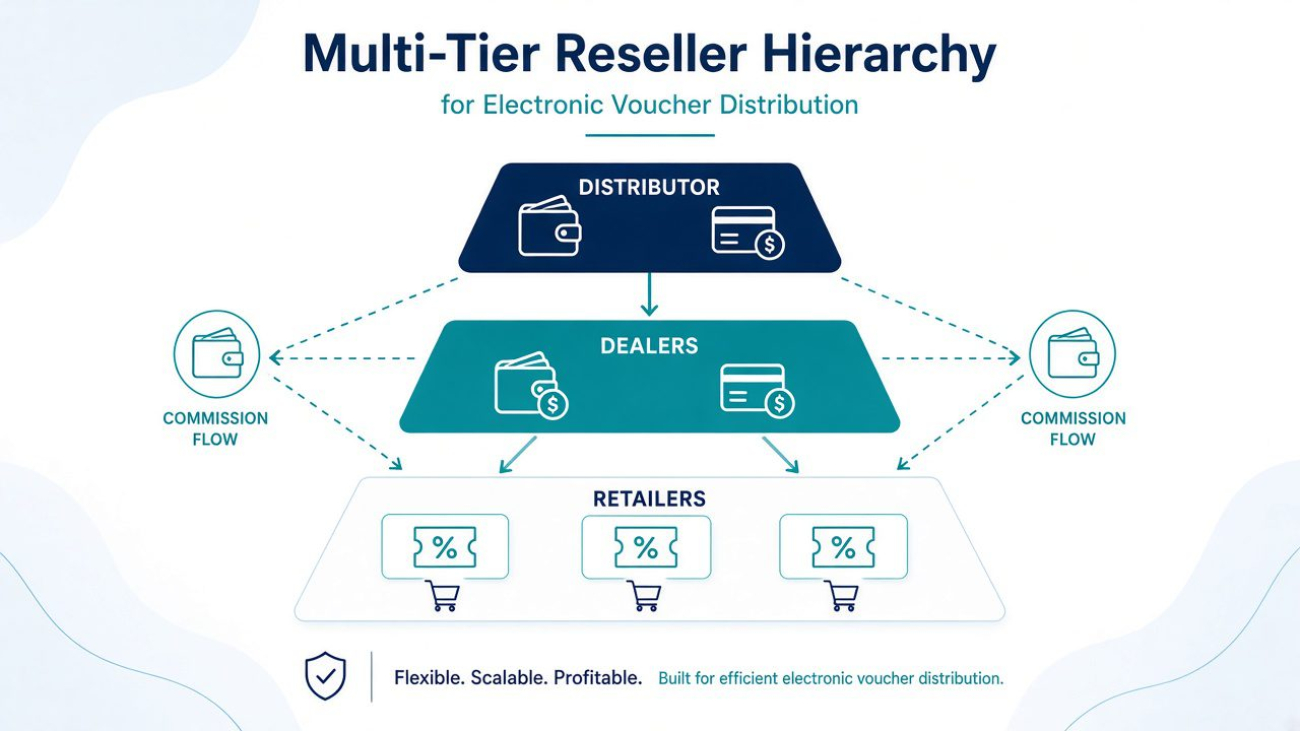
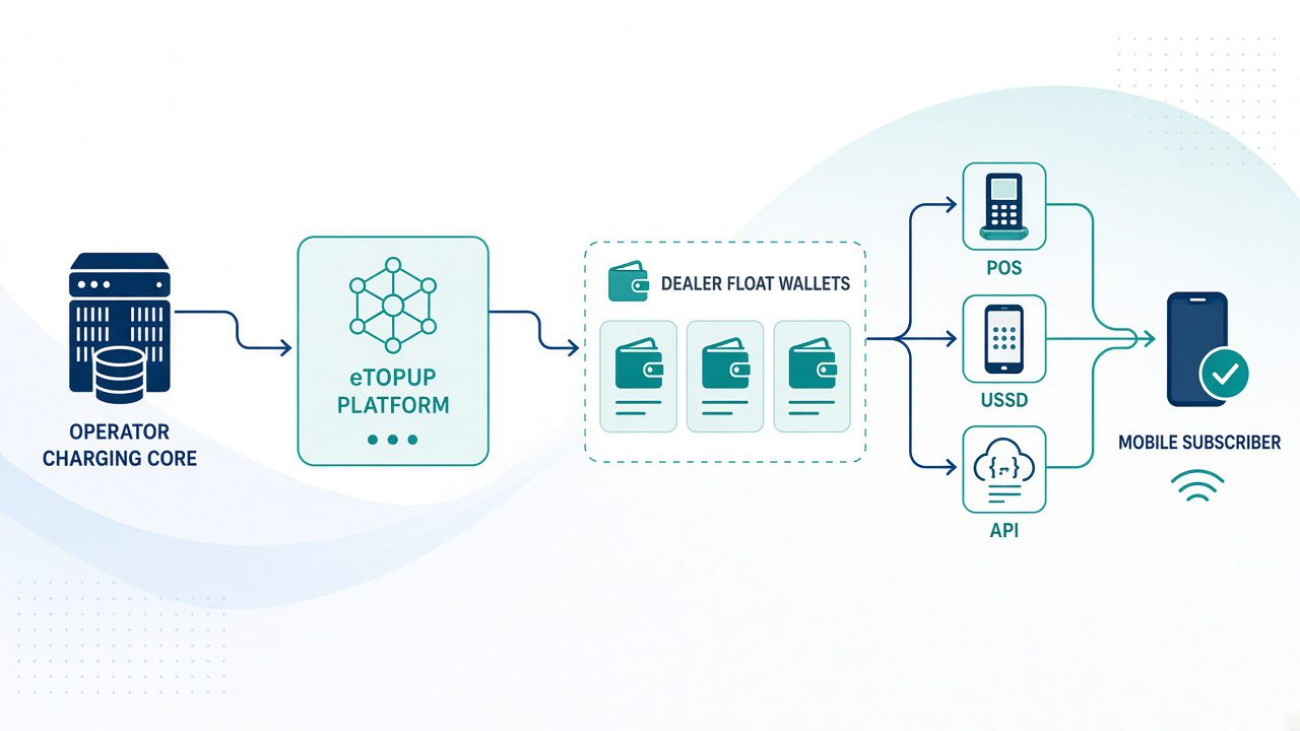
Much airtime and utility selling is paid for with distributor credit. Connecting CreditSync to MoboEVD inventory movement and to a shared service catalogue keeps sales activity and credit exposure in one record. The hierarchies in multi-tier reseller voucher distribution are where limits get assigned. Wallet cash-in/out and bank connectivity can fund repayments; those flows are covered in the wallet deep-dive and on the mobile money platform with merchant payment page.
For platform selection, see how to choose an electronic voucher management system and the EVMS product overview.
A day in a channel’s credit cycle
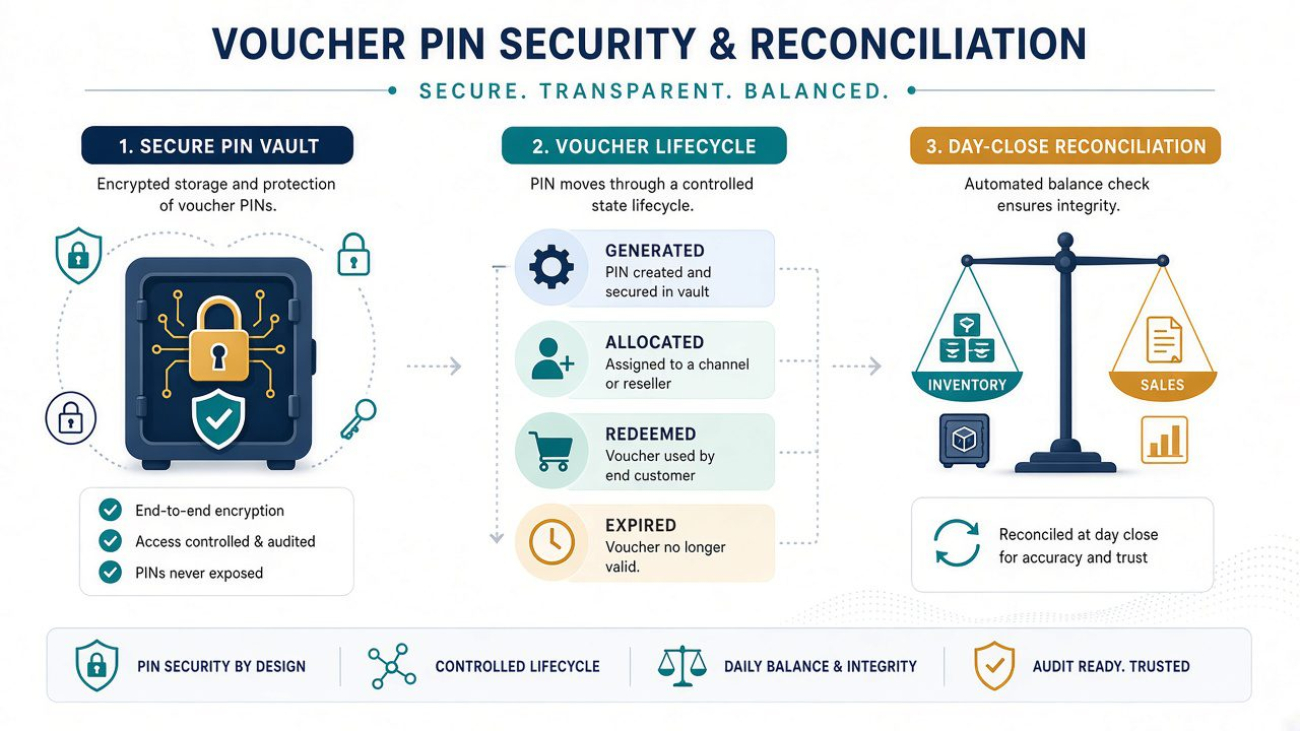
In the morning, channel managers check nodes near their limit and the overdue buckets before approving large stock transfers. Around midday, issuance funds agents who are out selling vouchers and catalogue products. In the evening, collections and bank or wallet inflows are matched and exposure comes down. At month-end, finance wants issuance, sales and repayments to tie together in one report. On a festival weekend when sales spike, limit headroom decides how much agents can sell, so it gets watched as closely as POS availability.
Decisions to make before the pilot
Are limits monetary ceilings, product caps, or both? Do sub-agents draw on their parent’s capacity or hold their own limits? Who can raise a limit temporarily, and under what dual-control rule? Does overdue status trigger a soft warning or a hard block on selling? The last choice changes agent behaviour in the field the next day, so warn the field before switching on a hard block.
If limits originate in core banking or a lender system, document and version that interface. If issuance creates spendable EVD or wallet float, document that one as well, and name the person who owns unmatched issuance events.
Reports channel leaders open
Useful CreditSync reports are plain: limit utilisation by node, issuance by day, collections by method, overdue aging, and a list of limit changes with who made each one. When an auditor asks who raised a ceiling last Thursday, that last list is the answer. Exports should match how finance already reconciles to bank or wallet inflows, without manual reshaping. During diligence we show the data model and real screens, not mocked-up figures.
What to compare across vendors
Recharge suites such as Comviva PreTUPS list features like SOS and auto reload, auto stock transfer and segment-based commission, which advance or move dealer float. Those features are useful. What buyers should check, with any vendor including us, is whether the advance sits against an authorized limit with holds, an owner and an aging trail, or whether it is just a balance top-up. Ask for a demo of two concurrent stock requests against the last of a limit, and of a partial repayment.
Rollout and readiness
Delivery runs Discover baselines and owners → Design limits, responsibilities and interfaces → Pilot one network segment → Roll out → Operate and expand, with acceptance agreed under representative conditions. Scope, references and evidence are shared through due diligence. CreditSync operations are labelled Established; In development and Proposed portfolio items are not presented here as available.
Bring the lending owner, the distributor or agent segment, and the overdue measures you care about. Enquire through the contact / voucher management system page, projects@mobogage.com, or +91-9928 366 889. Founder & CEO: Sohan Lal Soni, MoboGage Private Limited, Jaipur.
Frequently asked questions
What is CreditSync?
CreditSync is MoboGage’s Established capability for credit assignment, limits, issuance, collection and overdue tracking for agent and distributor finance. Authorized lenders retain lending policies and decisions.
Does CreditSync replace a lender’s credit decisioning?
No. Lenders keep lending decisions. CreditSync connects authorized limits and operational tracking (issuance, collections, overdue status) to distributor and agent workflows so channel finance stays visible.
Who typically uses CreditSync?
Banks, licensed lenders, fintechs and distribution groups that fund agent or distributor float. Telecom and retail channel operators also use it when working capital for the hierarchy is part of the commercial model.
What operating events does CreditSync track?
Typical events include credit limit assignment, issuance against an authorized limit, repayments and collections, overdue aging, and status changes that channel managers and finance can review.
How does CreditSync relate to MoboEVD and wallets?
EVD and wallet platforms move product and balances; CreditSync tracks the credit that often funds those balances. Keeping lending policy with the authorized institution avoids mixing regulated decisions into channel software.
How do we pilot CreditSync?
Bound one distributor network or agent segment, agree limit owners and overdue measures, then expand. Contact projects@mobogage.com or the voucher management system enquiry page.